
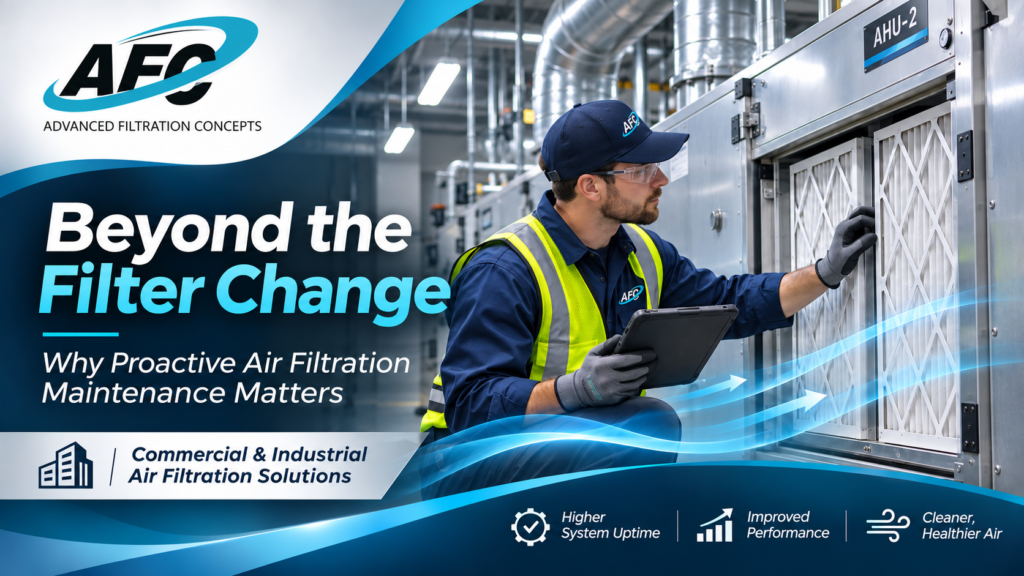
Maintaining clean air is only part of the equation. A proactive filtration strategy can help protect HVAC equipment, support operational efficiency, and keep facilities performing at their best.
In commercial and industrial facilities, air filtration is one of the most important components of a properly maintained HVAC system. Yet filter maintenance is often treated as a routine task rather than an opportunity to improve long-term system performance.
For facility managers overseeing hospitals, commercial buildings, manufacturing plants, and other demanding environments, a reactive approach to filter replacement can create unnecessary challenges.
The solution isn’t necessarily changing filters more frequently. It’s developing a maintenance strategy that accounts for the unique needs of each facility.
The Hidden Impact of Neglected Air Filters
Air filters work continuously to capture airborne particulate matter before it circulates through HVAC systems and occupied spaces.
As particles accumulate, airflow resistance generally increases. If filters remain in service beyond their recommended operating limits, the resulting pressure drop can affect overall system performance.
Depending on the equipment and operating conditions, neglected filtration can contribute to:
- Restricted airflow: Excessive filter resistance can reduce airflow through an HVAC system.
- Increased energy demands: Some systems may require additional fan energy to maintain their intended airflow.
- Equipment strain: Inadequate airflow can affect heating and cooling performance.
- Indoor air quality concerns: Damaged, improperly installed, or unsuitable filters can allow contaminants to bypass the intended filtration path.
- Unplanned maintenance: Deferred filter servicing can create additional work for already busy facility teams.
These challenges demonstrate why proper filtration maintenance should be considered an essential part of facility operations.
Why One Filter Maintenance Schedule Doesn’t Fit Every Facility
Not all buildings operate under the same conditions.
A hospital running HVAC systems around the clock has different filtration demands than a commercial office building with limited operating hours. Likewise, a manufacturing facility exposed to elevated dust levels may require a different maintenance approach than a relatively clean indoor environment.
Several factors influence filter service life:
1. Operating Conditions
Facilities with extended operating hours, high occupancy, or demanding production environments may experience different particulate loading rates.
2. Filter Efficiency and Design
Different filter types are designed for different applications. Selecting an appropriate efficiency rating, media configuration, and filter construction is essential for balancing particle capture with airflow requirements.
3. System Airflow and Pressure Drop
Monitoring differential pressure across filters helps maintenance teams understand how resistance changes over time. Filter replacement decisions should consider equipment design limits and manufacturer recommendations.
4. Environmental Factors
Outdoor air quality, construction activity, seasonal conditions, and facility-specific contaminants can influence how quickly filters accumulate particulate matter.
A successful filtration program considers these variables instead of relying exclusively on a fixed calendar schedule.
Selecting the Right Filter Is Just as Important as Replacing It
One of the most common misconceptions about air filtration is that a higher-efficiency filter is automatically the best choice for every HVAC system.
In reality, selecting the correct filter requires understanding the application.
A filter must provide the appropriate particle removal efficiency while remaining compatible with the system’s airflow requirements, available space, and operating characteristics.
For example, upgrading filtration efficiency without evaluating the existing HVAC system’s capabilities could introduce additional airflow resistance.
A more effective approach evaluates the entire filtration system, including filter dimensions, efficiency requirements, construction, installation, and maintenance accessibility.
The goal is not simply maximum filtration efficiency. It’s optimal filtration performance for the application.
The Value of a Proactive Filtration Maintenance Program
A well-planned maintenance program helps facility teams move from reacting to problems toward managing filtration performance with greater consistency.
An effective program should include:
- Routine filter inspections to identify visible damage, improper installation, or potential air bypass.
- Differential pressure monitoring where appropriate, helping determine when filters are approaching their recommended changeout limits.
- Application-specific filter selection to support system performance and filtration requirements.
- Scheduled filter replacements based on operating conditions, equipment requirements, and maintenance history.
- Consistent service documentation to track completed work, filter specifications, and future maintenance needs.
With a structured approach, facility managers can improve maintenance planning, reduce unexpected service issues, and make better-informed decisions about filtration expenses.
Why Professional Filter Installation Matters
Even a high-quality air filter cannot perform as intended if it is installed incorrectly.
Improper fitment, damaged gaskets, gaps around filter frames, and poorly secured filters can create pathways for unfiltered air to bypass the filter media.
Professional installation helps ensure filters are properly positioned, securely fitted, and appropriate for the equipment in which they’re installed.
For facilities with numerous air handling units, multiple filter configurations, or demanding operating environments, consistent installation practices become especially important.
This is where working with an experienced filtration service provider can make a meaningful difference.
Preparing Your Facility for the Year Ahead
As the year comes to a close, now is an excellent opportunity for facility managers to review their filtration programs and identify areas for improvement.
Consider asking:
- Are our current filters appropriate for each HVAC application?
- Are replacement intervals based on actual system conditions?
- Have we experienced recurring airflow or pressure-drop issues?
- Are filter installation and maintenance records properly documented?
- Could a more organized service program improve maintenance efficiency?
Answering these questions can help establish a stronger foundation for the coming year.
Partner with Advanced Filtration Concepts
At Advanced Filtration Concepts (AFC), we understand that effective air filtration requires more than simply supplying replacement filters. From product selection and delivery to professional installation and ongoing filtration service, our team helps facilities maintain dependable filtration systems. We work with hospitals, commercial facilities, industrial operations, and other demanding environments to provide solutions tailored to their operational needs. Whether you’re reviewing your existing filtration program, planning upcoming filter changeouts, or exploring ways to improve maintenance efficiency, AFC is here to help.
Reliable filtration starts with the right products, experienced service, and a proactive approach.
Visit www.advfiltration.com to learn more about our commercial and industrial air filtration solutions.